
Discovery is the interface
Category browsing, search, shuffle, and recommendations offer several ways into the archive. The content can remain simple while the experience stays varied.
A world of interesting things, ready to explore
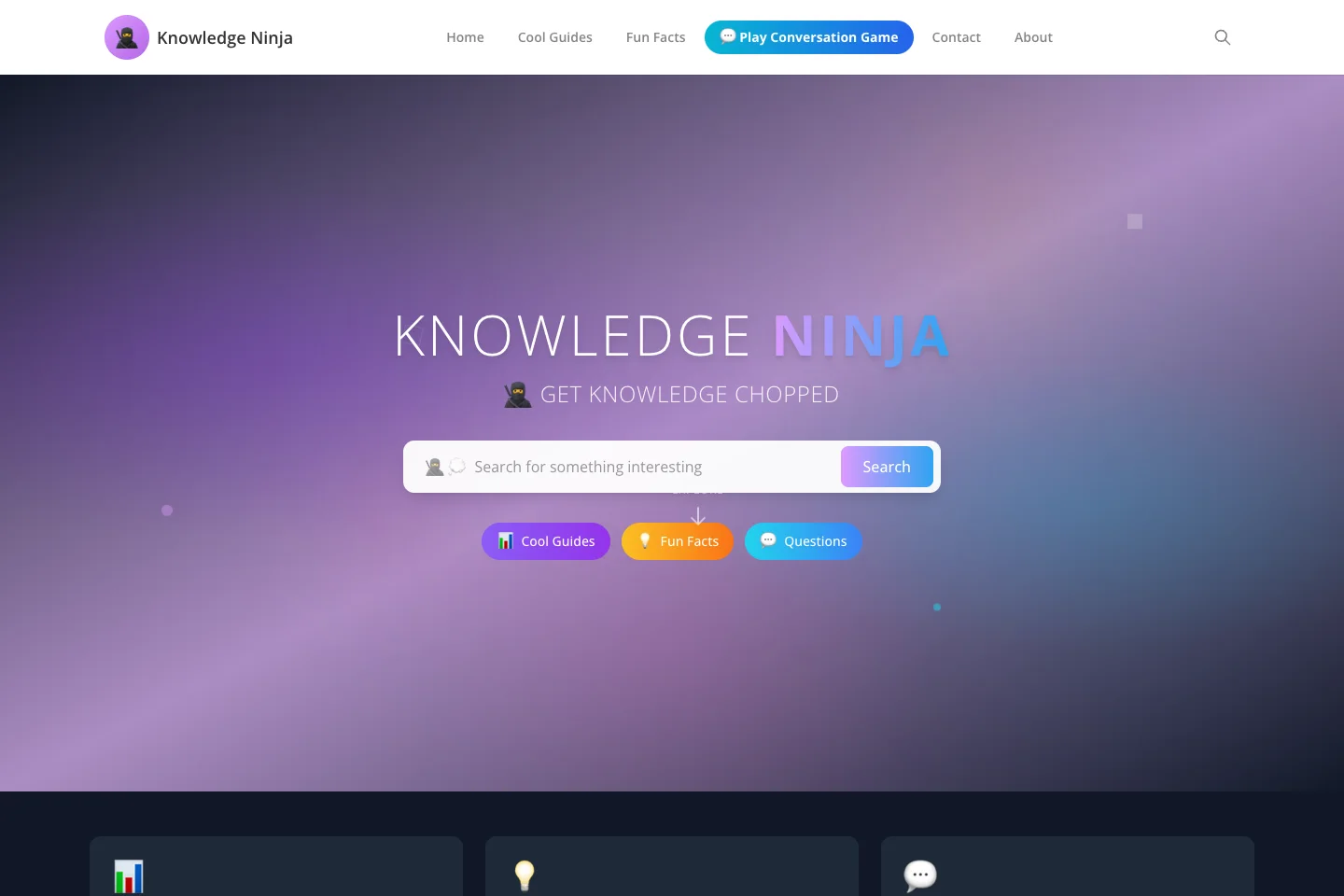
The Knowledge Ninja archive at knowledgechop.com brings visual guides, facts, and conversation starters into a fast, playful experience. The WordPress migration moved the content into category-based JSON, while discovery tools help visitors find something worth reading across thousands of entries. Personalization stays in the browser, and a conversation game gives the question archive another life.
A large archive needs more than a list of posts. Visitors need ways to browse, search, and discover material without losing the simplicity of a short-form content site.
The content was a good fit for a simpler publishing model, provided that the migration preserved useful URLs and the deployment reliably included the archive.
From the underlying data to the moment someone uses the product, each decision serves the work.
The WordPress migration exports content into per-category JSON files. Shared loaders support browsing, search, and related content without a runtime content database.
A browser-local engagement model uses reading activity and recency to influence recommendations. It does not require a user account or a server-side recommendation profile.
Seeded shuffling makes content selection reproducible for a given seed. It gives the implementation a repeatable way to verify selection behavior while supporting a varied browsing experience.
Legacy URL redirects keep old entry points useful. Explicit output file tracing ensures the deployed application includes the JSON files its content loaders read.
Category browsing, search, shuffle, and recommendations offer several ways into the archive. The content can remain simple while the experience stays varied.
The conversation-question collection powers an interactive game, turning an archive of prompts into something people can use together.
Category files keep the archive inspectable and the content-loading model explicit. The product does not need a live WordPress installation to serve its migrated material.
Interactive views built from how Knowledge Ninja actually works. Pick one to explore.
How Knowledge Ninja works
A closer look at the technology and integrations behind Knowledge Ninja.
A conceptual view of the technology groups. Layer positions do not represent deployment boundaries.
EXPLORE THE BUILD / Knowledge Ninja

“South Austin’s Louisiana Soul”